Acne scarring
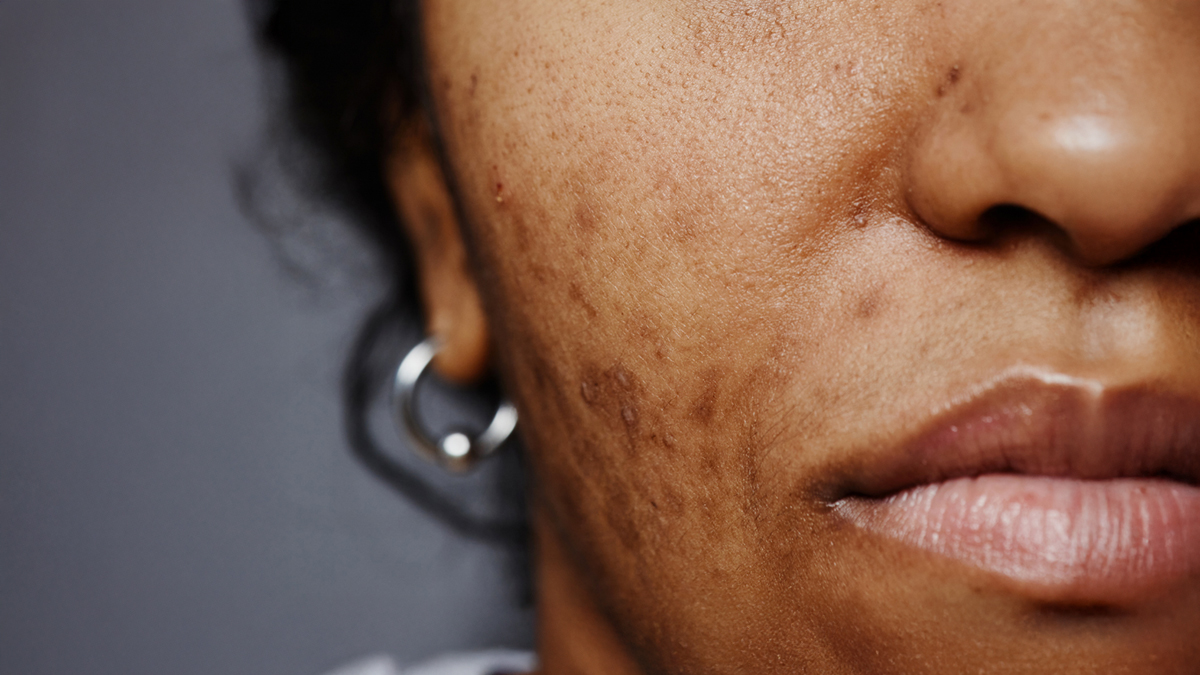
Acne scarring
Acne has a prevalence of over 90% among adolescents and persists into adulthood in approximately 12%–14% of cases.
Inflammatory acne (papules,pustules,nodules and cysts) lesions can result in permanent scars, the severity of which may depend on the acne grade and delays in treatment.
Severe scarring caused by acne is associated with substantial physical and psychological distress, particularly in adolescents
Scarring can occur as a result of damage to the skin during the healing of active acne.
There are two basic types of scars depending on whether there is a net loss(atrophic) or gain of collagen (hypertrophic scars).
80-90 % of people with acne scars have scars associated with a loss of collagen (atrophic scars) compared to a minority who show hypertrophic scars and keloids.
Atrophic Scars:
Atrophic acne scars are more common than keloids and hypertrophic scars with a ratio 3 : 1.
They have been subclassified into ice pick, boxcar, and rolling scars
Sometimes the 3 different types of atrophic scars can be observed in the same patients and it can be exceedingly difficult to differentiate between them
Ice pick scars:
Ice-pick scars comprise 60 to 70 percent of atrophic scars
these narrow, less-than-2mm, v-shaped epithelial tracts have a sharp margin that extends vertically to the deep dermis or subcutaneous tissue
their depth of involvement makes ice-pick scars resistant to conventional skin resurfacing options
Box scars:
boxcar scars comprise 20 to 30 percent of atrophic scars
these scars are wider, 1.5- to 4.0mm, round-to-oval depressions with sharply demarcated vertical edges
shallow boxcar scars (0.1–0.5mm) are amenable to skin resurfacing treatments, whereas deep boxcar scars (≥0.5mm) are resistant
Rolling scars:
rolling scars comprise 15 to 25 percent of atrophic scars
these scars are the widest and may reach up to 5mm in diameter
Fibrous anchoring of the dermis to the subcutis results in superficial shadowing and a smooth fall and rise appearance of the scars
treatment must focus on correction of the subdermal component
Treatment options:
early and aggressive treatment of active acne remains the best way to prevent or limit acne-related scarring
it is also of vital importance to ensure active acne has been treated before approaching scar treatment so as not to create a cycle where active lesions continue to
scar in areas already addressed
treatment of generalized atrophic acne scars involves a field approach, and includes
Dermabrasion:
Dermabrasion utilizes a manual hand or machine-driven source to remove the epidermis with or without part of the dermis
the procedure allows the dermatologist to precisely define scar edges
it is best used for well-defined scars with distinct borders or broad-based scars with indistinct borders, but not for ice-pick or deep boxcar scars
Dermabrasion seeks to reorganize the papillary dermal collagen without injury to the reticular dermis leading to new collagen formation
complications include significant pain, scarring, pigment changes, and milia formation
after treatment, patients will experience increased sun sensitivity for several months, and unprotected skin can often develop hyperpigmentation
Chemical peels:
chemical peels are used to treat small, depressed scars but not ice-pick or deep boxcar scars
they induce injury to the skin that stimulates collagen remodelling and are categorized as superficial, medium, and deep based on the depth of the injury
superficial peels, such as lactic acid, salicylic acid, glycolic acid, Jessner solution, and 10 to 25% trichloroacetic acid, only affect the epidermis
medium depth peels, such as combined Jessner solution with 35 to 50% trichloroacetic acid affect the epidermis and papillary dermis
in most patients, medium depth peels result in moderate clinical improvement (51–75% clearance), with transient post inflammatory hyperpigmentation resolving within three months
The chemical reconstruction of skin scars (CROSS) technique:
the cross technique is indicated for icepick and narrow boxcar scars
it involves a high-strength trichloroacetic acid (tca) peel (65–100%) applied to the base of the scar to ablate the epithelial wall and to promote dermal remodeling
the degree of clinical improvement is proportional to the number of courses of cross treatment, with good improvement after 3 to 6 courses reported in more than 90 percent of cases
Fractional 1,550nm erbium-doped laser has been shown to outperform cross for the treatment of rolling scars, but no difference has been observed for icepick scars.
Microneedling:
microneedling (collagen induction therapy) utilizes tiny needles to puncture the skin multiple times, creating microclefts that penetrate into the dermis
the trauma in the dermis initiates wound healing and growth factor release, leading to collagen production and deposition in the upper dermis
skin needling renders facial skin smoother and improves rolling acne scars
similar to subcision, the tethered rolling scars can be overcome by greater collagen and elastin deposition induced by needling
the full result may take 8 to 12 months as the deposition of new collagen takes place slowly
one important advantage is that the epidermis remains intact, eliminating most of the risks of chemical peeling or laser resurfacing
furthermore, microneedling provides a clear channel for the efficient absorption of topical agents, including platelet-rich plasma (prp), which can improve cosmetic results
results of microneedling treatment were comparable to the non-ablative fractional laser in one study
Other treatment options:
radiofrequency
laser
fillers for isolated scars (in soft atrophic rolling or boxcar scars)
punch excision and punch elevation (for ice-pick and boxcar scar)
subcision (best suited for rolling acne scars)
More blogs
The Importance of Regular Skin Checkups
Why Is My Skin Dull?